

Call or text us now!!
Heat Pump Repair in Hampton Roads
What Heat Pump Behavior Is Normal?
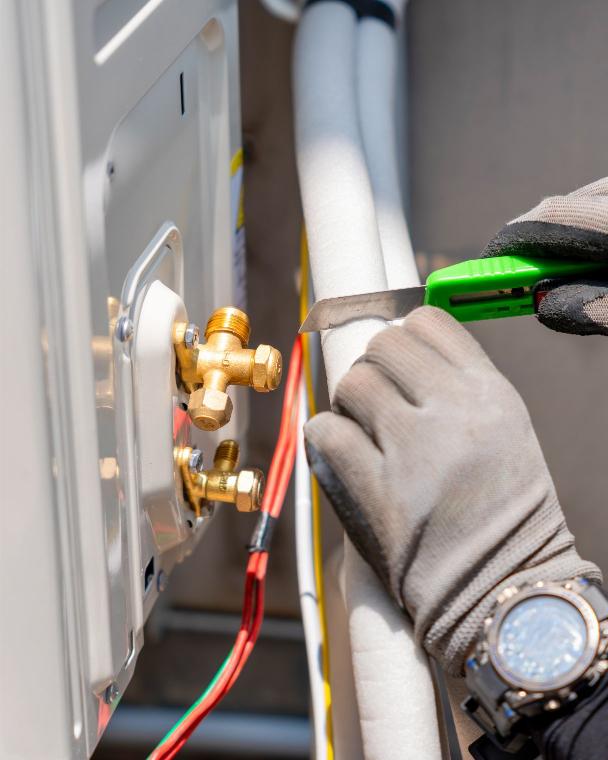
Some things that look like trouble are a heat pump doing its job, and knowing the
difference can save you a service call. In winter, frost collects on the outdoor coil. Every so often, the system reverses itself for a few minutes to melt it. During that defrost cycle you may see steam rising from the outdoor unit, hear a whoosh as the reversing valve shifts, and feel cooler air from the vents. All of that is normal.
A light frost that clears on its own is normal. A coil encased in solid ice that never clears is not. Auxiliary heat switching on during a hard cold snap is normal. Auxiliary heat running all day when it is 50 degrees outside is not. If you are not sure which side of the line you are on, call and describe what you are seeing. If it sounds normal, we will say so.
What Are the Signs Your Heat Pump Needs Repair?
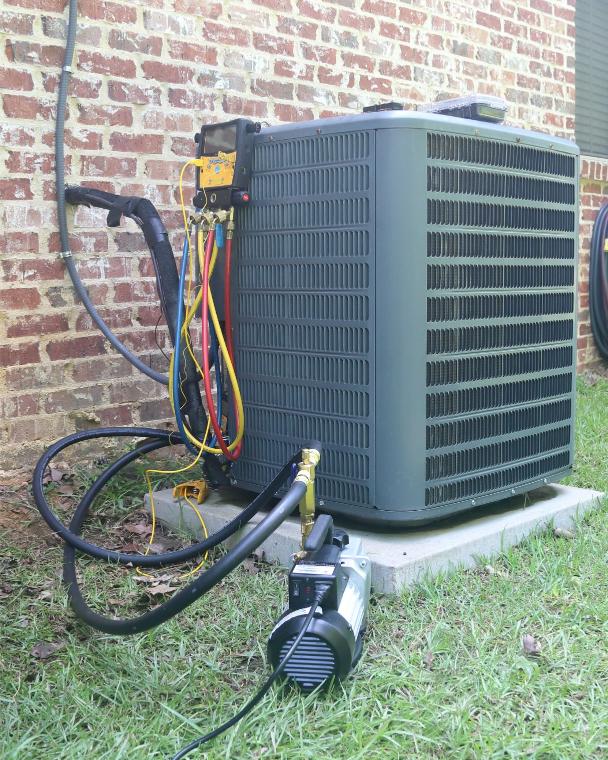
The clearest sign is a heat pump that runs but no longer holds the temperature you set. Most problems announce themselves in one of these ways. None of them identifies the failed part on its own, but each narrows the search:
Cool or lukewarm air in heating mode
can point to a stuck reversing valve, low refrigerant, or a stopped outdoor fan
Running constantly without catching up
often points to a refrigerant, airflow, or compressor issue.
Short cycling,
meaning the system turns on and off every few minutes, usually traces to a control, sensor, or electrical fault.
Ice that will not clear
from the outdoor coil suggests the defrost cycle is not doing its job.
Grinding, rattling, squealing, or loud hissing
usually comes from failing motors, loose parts, or escaping refrigerant.
A system stuck in one mode
points first to the reversing valve or its controls.
Auxiliary heat running far more than usual
shows up on the thermostat as “aux” or “emergency heat,” and on the electric bill.
Water pooling around the indoor unit
usually points to a blocked condensate drain or a failed condensate pump.
What Happens During a Heat Pump Repair Visit?
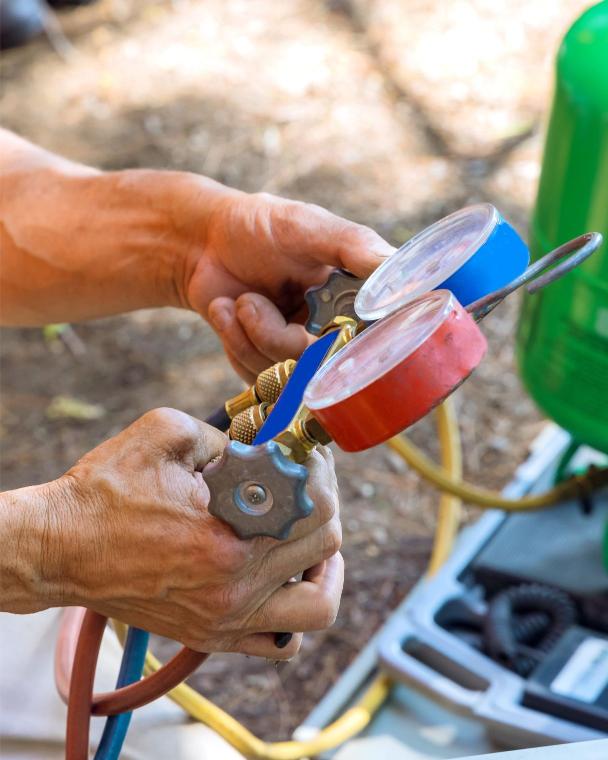
We start with the cause, not the symptom, because a coil that ices over from low airflow will ice over again if all we do is thaw it. Once we know what failed, we explain why it happened and what the options are, with upfront pricing and no upselling, so the decision is yours.
We diagnose and repair reversing valves and their solenoids, defrost control boards and sensors, capacitors and contactors, indoor blower motors and outdoor fan motors, compressors, thermostats and control wiring, and condensate drains and pumps. We also handle refrigerant evaluations and leak repair.
A heat pump repair is finished when the system is running properly and holding temperature again, not when the part is in.
Why Do Heat Pumps Work Hard in Hampton Roads?
Because a heat pump here runs in both seasons, and the local climate adds wear to each one. Summer humidity means long cooling cycles, since the system has to pull moisture out of the air as well as heat. Winter brings mostly moderate temperatures, which heat pumps handle well, broken up by cold snaps that push the system onto auxiliary heat. Few months are truly off, so motors, capacitors, and contactors accumulate hours faster than they would in a climate with long idle stretches. Homes near the water also deal with salt air, which is hard on outdoor coils and electrical connections.
Should You Repair or Replace Your Heat Pump?
Repair is usually the right call when the system is reasonably young, and the problem is a single failed part. Replacement makes more sense when repairs become frequent, a major component such as the compressor fails outside warranty, or the repair would cost a large share of a new system.
Older systems that use R-22 refrigerant deserve a closer look. New R-22 production and imports ended in 2020. You can still service existing systems with available R-22, but a leak in an older system can make repairs more expensive. Compare the actual repair quote with replacement before deciding.
We will tell you plainly which option makes more sense for your system. If it is replacement, our heat pump installation and replacement page covers what to expect.
What If It Is an Emergency?
For emergencies, call or text us. A heat pump failure becomes urgent when the house loses heat during a cold snap, and someone at home is elderly, very young, or medically vulnerable. If you smell burning or see scorching at the indoor or outdoor unit, turn the system off at the thermostat and call before running it again.
Members of our maintenance plans have 24-hour emergency service included as a plan benefit.
Where Do We Repair Heat Pumps?
We repair heat pumps across South Hampton Roads, in Chesapeake, Virginia Beach, Norfolk, and Suffolk.
Heat Pump Repair FAQs
How much does heat pump repair cost?
It depends on the failed part, how accessible it is, and whether refrigerant work is involved. A failed capacitor is a very different job from a reversing valve replacement, which is why the diagnosis comes first. Pricing is upfront, so you decide with the number in front of you. To get started, request service or call now.
Why is my heat pump blowing cold air in heat mode?
If it lasts only a few minutes and you see steam outside, the system is probably in a normal defrost cycle. If it continues, the likely causes include a stuck reversing valve, low refrigerant, a failed outdoor fan motor, or a thermostat set to the wrong mode. A technician can tell which by testing the system rather than guessing from the symptom.
How long do heat pumps last in coastal Virginia?
Many residential heat pumps last somewhere around 10 to 15 years, but the range is wide. Year-round operation and salt air can shorten that life, while regular maintenance and prompt repairs can extend it.
Can a maintenance plan prevent heat pump repairs?
Many residential heat pumps last somewhere around 10 to 15 years, but the range is wide. Year-round operation and salt air can shorten that life, while regular maintenance and prompt repairs can extend it.
Schedule an Appointment
Phone: (757) 752-2722 | Send us an email
