

Call or text us now!!
AC Repair in Hampton Roads

Is Your AC Actually a Heat Pump?
It might be. Many Hampton Roads homes have a heat pump that the owners call “the AC,” because in summer the two look and work the same way. The quickest test is to think back to winter. If the outdoor unit also runs in cold weather to heat the house, you have a heat pump. We repair both, but heat pumps have a few failure points of their own, so heat pump owners will find more specific help on our heat pump repair page.
What Should You Check Before You Call?
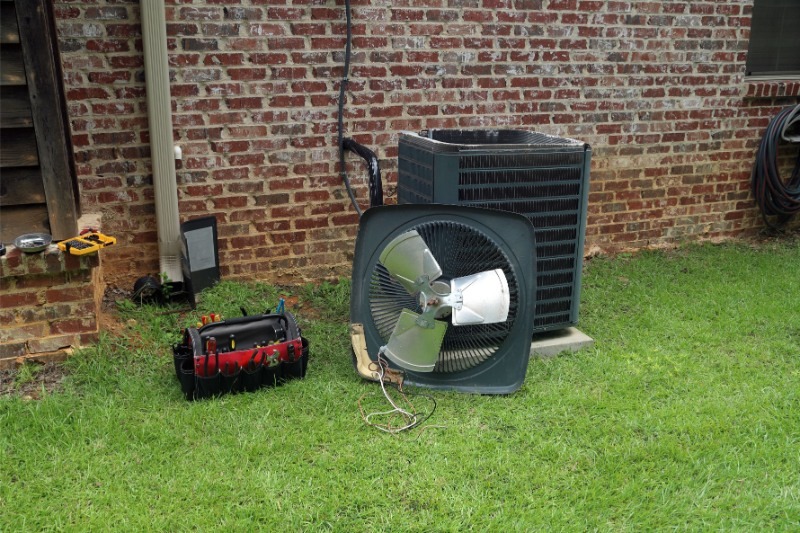
A few quick checks can sometimes solve the problem before you call:
- Thermostat. Make sure it is set to cool and set below the current room temperature. Replace the batteries if it uses them.
- Breaker. If the AC breaker has tripped, reset it once. If it trips again, leave it off and call. A breaker that keeps tripping is protecting you from an electrical fault.
- Filter. A clogged filter can restrict airflow enough to freeze the indoor coil.
- Outdoor unit. Clear away leaves, grass clippings, and anything stacked against it.
- Standing water near the indoor unit. Some systems have a safety switch that shuts the AC off when the drain line backs up. If you see water, that switch may be why the system stopped.
Anything beyond these checks, including opening panels, touching electrical parts, or handling refrigerant, is a job for a technician.
What Are the Signs Your AC Needs Repair?
The clearest sign is an air conditioner that runs but doesn’t cool the house. Most AC problems show up in one of these ways. Each points toward a likely cause, but a technician confirms it by testing, not by the symptom alone:
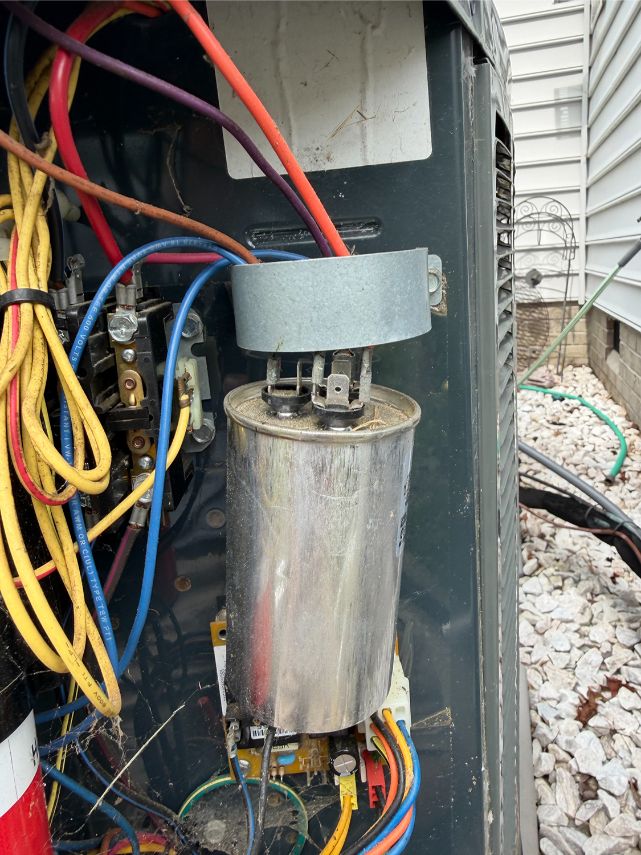
Warm air from the vents can mean low refrigerant, a failed capacitor, or an outdoor unit that is not running.
Weak airflow can come from a clogged filter, a failing blower motor, a dirty coil, or leaking ductwork.
Ice on the indoor coil or refrigerant lines usually means restricted airflow or low refrigerant.
Water leaking inside usually means a clogged condensate drain line or a cracked drain pan.
Short cycling may be an electrical fault, a failing sensor, or a system that is oversized for the house.
An outdoor unit that will not start while the indoor fan runs points to a capacitor, contactor, or breaker.
Buzzing, banging, or squealing often comes from failing motors or loose parts.
A clammy house at the right temperature means the system is not removing enough moisture.
What Happens During an AC Repair Visit?
We diagnose first, because a frozen coil caused by a failing blower motor will freeze again if all we do is thaw it. When we know what failed, you get the reason, the options, and upfront pricing without any upselling, and then you decide.
We handle repairs for capacitors and contactors, indoor blower motors and outdoor fan motors, evaporator and condenser coil cleaning, condensate drain lines, drain pans, condensate pumps, thermostats, and control boards. Refrigerant evaluations and leak repair are part of the job as well. A repair is finished when the system is cooling, moving air, and draining properly, not when the part is in.
Why Do Air Conditioners Struggle in Hampton Roads Summers?
Because the season is long and the air is wet. An air conditioner here spends months doing two jobs at once, lowering the temperature and pulling moisture out of the air. That means long run times, heavy wear on motors and electrical components, and a steady stream of condensate that has to drain away. When the drain line clogs with algae or debris, water backs up, and a humid climate makes that a familiar summer problem.
Location adds its own stress. Salt air near the water corrodes outdoor coils and connections, and wooded lots, such as the areas around Whaleyville, Holland, and Chuckatuck in Suffolk, load outdoor units with pollen and debris over a summer.
Should You Repair or Replace Your Air Conditioner?
Repair is usually the better choice when the system is in good overall shape and the problem is a single component. Replacement becomes worth considering when repairs are piling up, the system is well past its prime, or energy bills keep climbing.
An older system that uses R-22 refrigerant is a special case. Production and imports of new R-22 ended in 2020. You can still service these systems with available R-22, but a leak can make the repair expensive enough that replacement is worth considering. Compare the real quotes.
We will tell you honestly which option makes more sense. If replacement is on the table, our AC installation and replacement page covers what to expect.
What If It Is an Emergency?
For emergencies, call or text us. An AC failure is urgent when indoor temperatures climb during a heat wave, and someone in the home is elderly, very young, pregnant, or medically vulnerable. If you notice a burning smell, see smoke, or hear loud electrical buzzing, turn off the system at the thermostat and the breaker, then call.
If you have a maintenance plan, 24-hour emergency service is included.
Where Do We Repair Air Conditioners?
We repair air conditioners in Suffolk, Norfolk, Virginia Beach, and Chesapeake. Each city page lists the neighborhoods we serve.
AC Repair FAQs
How much does AC repair cost?
It depends on what failed. Replacing a capacitor is a small job, while repairing a refrigerant leak or replacing a motor costs considerably more. The cost reflects the part and labor involved, which is why we diagnose first and provide upfront pricing so there are no surprises on the invoice. To get started, request service or call now.
Why is my AC running but not cooling?
Common causes include low refrigerant, a failed capacitor or contactor that keeps the outdoor unit from running, a clogged filter, or a dirty coil. A thermostat set to “fan on” instead of “auto” can also make it seem like the AC is running without cooling.
Why is my air conditioner leaking water inside?
Usually because the condensate drain line is clogged, and water backs up into the drain pan and overflows. A cracked pan, a disconnected drain line, or a thawing frozen coil can cause the same thing. Turn off the system to limit water damage, then call for service.
Is it normal for my AC to run all day in July?
On the hottest, most humid days, long run times are normal, especially in the afternoon. What is not normal is an AC that runs all day and still cannot bring the house close to the temperature you set.
Schedule an Appointment
Phone: (757) 752-2722 | Send us an email
