

Call or text us now!!
Furnace Repair in Hampton Roads
When Is a Furnace Problem an Emergency?
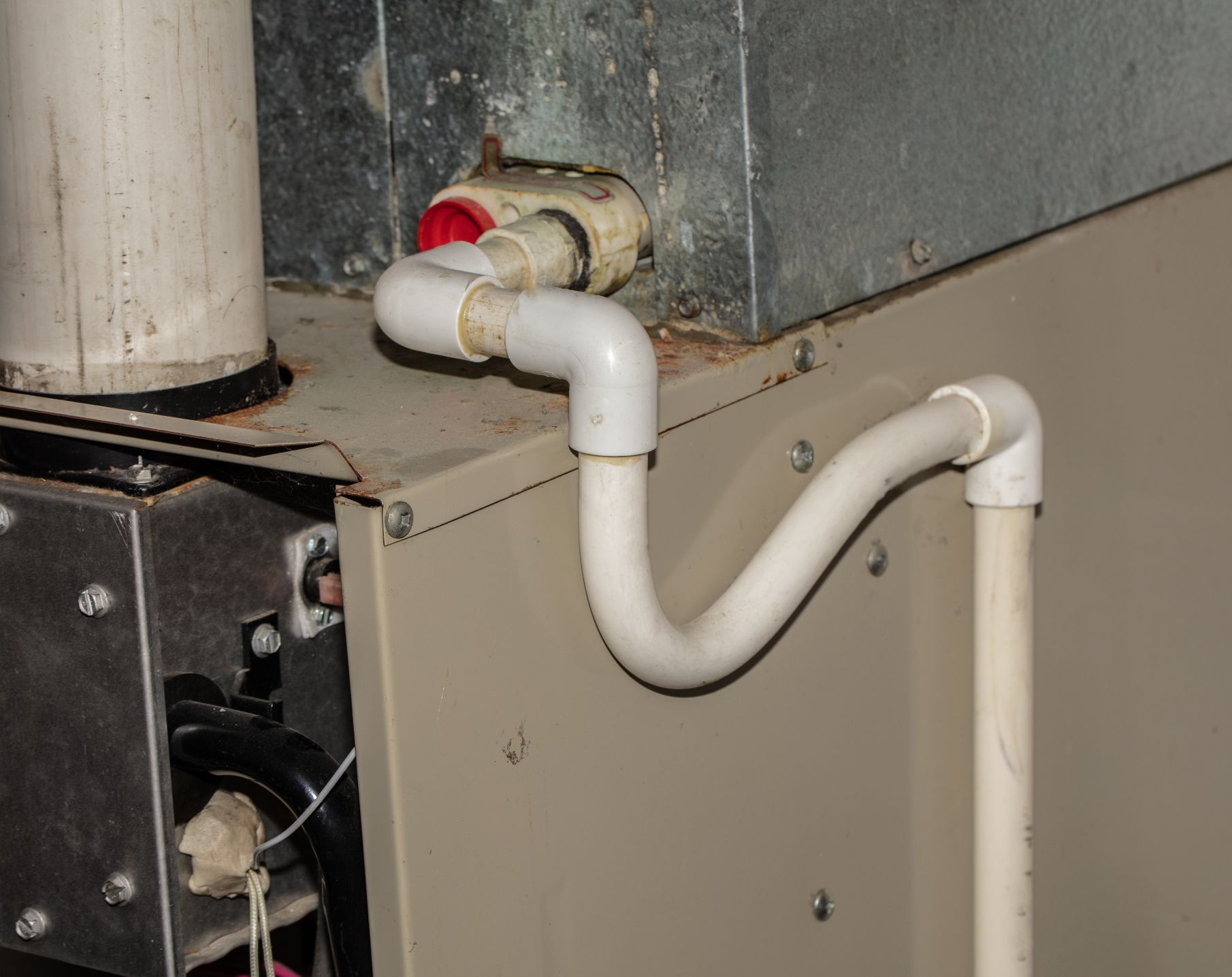
Two situations come first on this page. If your carbon monoxide alarm sounds, get everyone out of the house right away and call 911 from outside. Do not stay inside to look for the source. If you smell gas, leave the house without flipping light switches or using appliances, and call 911 or your gas utility’s emergency line once you are outside.
For any other heating emergency, call or text us. A furnace failure is urgent when the house loses heat during a cold snap, and someone at home is elderly, very young, or medically vulnerable. If you see scorching or smell burning wiring, turn the furnace off at the thermostat and call before running it again. Our maintenance plan members have 24-hour emergency service as a benefit.
No Heat? Check These Before You Call
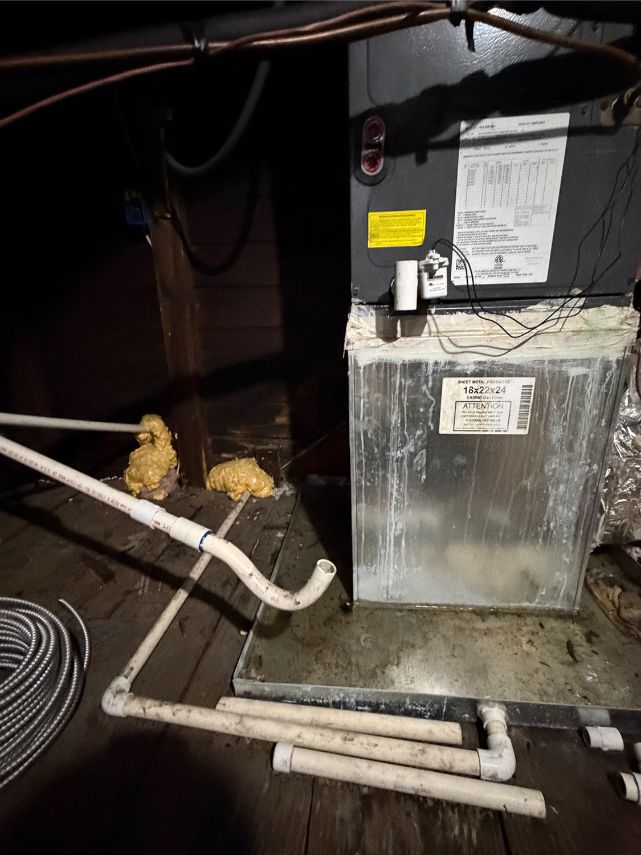
- Thermostat. Set to heat and set above the current room temperature. Replace the batteries if it uses them.
- Furnace power switch. Most furnaces have a light switch on or near the unit. Make sure it is on.
- Front panel. Many furnaces will not run unless the front access panel is fully seated.
- Breaker. Reset a tripped breaker once. If it trips again, leave it off and call.
- Filter. A badly clogged filter can cause a furnace to overheat and shut itself off.
Do not adjust gas valves or pilot assemblies. If the furnace still will not run after these checks, it needs a technician.
What Are the Signs Your Furnace Needs Repair?
Each of these narrows the search, but none identifies the failed part on its own:
No heat at all, or the blower runs without the burners or heating elements coming on.
Cold or lukewarm air from the vents can point to an ignition problem, a flame sensor shutting down the burners, or failed heating elements in an electric furnace.
Short cycling, where the furnace shuts off before the house warms, may mean overheating, a clogged filter, or a faulty limit switch.
Ignition trouble, such as clicking without lighting or burners that light and go out, often traces to the igniter, flame sensor, or gas valve.
A burning smell that lingers. A brief dusty smell the first time you turn the heat on each fall is normal. A burning or electrical smell that continues is not.
Banging, booming, squealing, or rattling can come from delayed ignition, failing motors, or loose parts.
A yellow or flickering flame on a gas furnace is worth mentioning when you call. Flame color alone does not confirm or rule out a problem, so leave that diagnosis to the technician.
Uneven heat or rising bills with no change in use.
What Furnace Repairs Do We Handle?
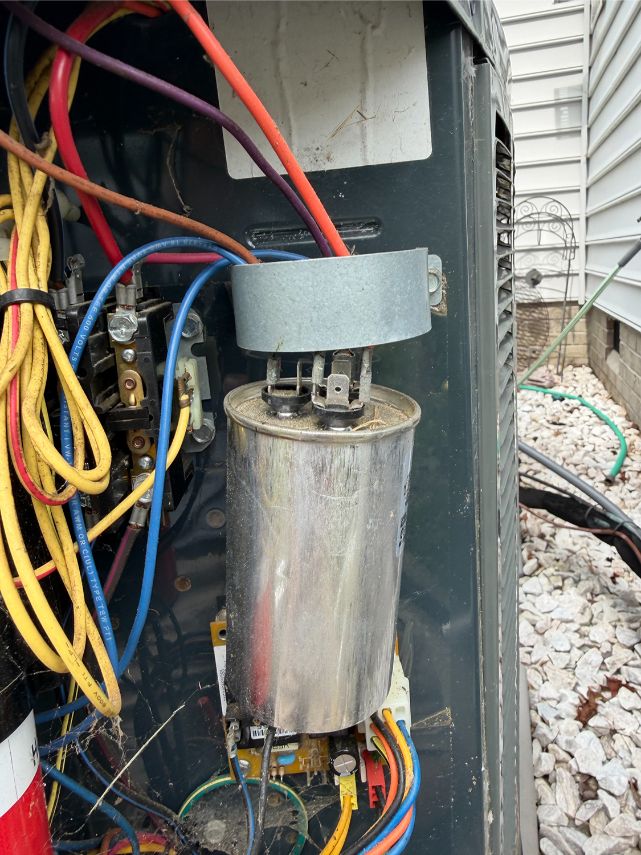
On gas furnaces, we repair hot surface igniters, flame sensors, inducer motors, pressure switches, limit switches, gas valves, control boards, and blower motors. On electric furnaces and air handlers, we repair heating elements, sequencers, relays, blower motors, and controls. On any system, we diagnose thermostat and wiring problems, as well as airflow issues caused by clogged filters or blocked returns.
Once we know what failed, we explain why and what the options are, with upfront pricing and no upselling, so the decision is yours.
Some findings change the conversation. A cracked heat exchanger on a gas furnace is a safety finding. It can allow combustion gases into the air the furnace circulates. Depending on the furnace’s age and warranty, the options are usually replacing the heat exchanger or replacing the furnace, and which one makes sense depends on the furnace. Our HVAC installation and replacement page explains what a replacement involves.
Is It Your Furnace or Your Heat Pump?
In many Hampton Roads homes, the answer is both, or neither. Many houses heat with a heat pump and use electric heat strips or a gas furnace only as backup. If your outdoor unit runs in winter to heat the house, your primary heat source is a heat pump, and our heat pump repair page will be more useful. Some homes have a dual-fuel system that pairs a heat pump with a gas furnace and switches between them based on outdoor temperature, and a no-heat call on one of those starts with figuring out which half has the problem.
Should You Repair or Replace Your Furnace?
Repair makes sense when the furnace is in good overall condition and the problem is a single part, like an igniter or a flame sensor. Replacement is worth considering when the furnace is old, when repairs keep coming, when a safety finding turns up, or when heating bills keep climbing. It is also a natural moment to consider whether a different heating setup, such as a heat pump, would suit your home better. If replacement is the right call, see our HVAC installation and replacement page, or read about heat pump installation if you are thinking about switching.
Why Is an Annual Furnace Inspection Worth It?
Because the problems that matter most are the ones you cannot see. A cracked heat exchanger, a failing flame sensor, or a venting issue gives little warning before it becomes a safety concern or a no-heat call on a cold night. An inspection before the heating season gives a technician the chance to find these problems early and to clean and check the parts that affect efficiency and safe operation. Our maintenance plans include a pre-winter visit that covers gas pressure checks, electrical testing, and safety checks, and the right time to schedule it is before the first cold night.
Where Do We Repair Furnaces?
We repair furnaces in Norfolk, Suffolk, Chesapeake, and Virginia Beach. Each city page lists the neighborhoods we serve.
Furnace Repair FAQs
How much does furnace repair cost?
It depends on the part and the fuel type. Replacing a flame sensor or an igniter is a modest repair, while a control board, inducer motor, or gas valve costs more. The cost follows from what the diagnosis finds, and pricing is upfront. To get started, request service or call now.
Why is my furnace running but blowing cold air?
On a gas furnace, the usual suspects are an ignition problem, a dirty flame sensor that shuts off the burners, or a limit switch tripping because of poor airflow. On an electric furnace, failed heating elements or sequencers are likely. A thermostat set to “fan on” rather than “auto” will also blow unheated air between heating cycles.
Is a burning smell normal when I first turn the heat on?
A dusty, slightly burnt smell for the first few minutes of the season is normal, because dust that settled on the burners or elements over the summer is burning off. If the smell lasts longer than that, smells like plastic or wiring, or comes back every time the furnace runs, turn the system off and call.
How long do furnaces last?
Gas furnaces commonly last 15 years or more with regular maintenance, which is generally longer than heat pumps or air conditioners. Age alone is not a reason to replace one, but an older furnace that needs frequent repairs is worth a closer look.
Schedule an Appointment
Phone: (757) 752-2722 | Send us an email
